

Amada Fanuc Control Upgrade:
A Case Study in Preventing Costly Downtime
The Machine Was Not the Problem
This case started with a machine that had already proven itself for decades.
The Amada continued to deliver the mechanical strength, reliability, and durability that made these machines famous. Its mechanical system represented exactly why many shops continue to depend on their Amada equipment year after year.
However, one part of the machine had a different challenge.
The original control had spent decades operating in a demanding manufacturing environment.
That distinction matters.
The Amada machine remained an exceptional production asset. The control simply needed modern technology to match the machine’s proven mechanical durability.
That is where an Amada Fanuc control upgrade enters the picture.
The Alarm Started the Investigation
A communication problem brought this particular control in for troubleshooting.
On certain older Amada/Fanuc controls, communication problems can produce Alarm 086 or Alarm 087. Although the machine can continue operating mechanically, the operator may lose the ability to upload and download CNC programs through the PC.
Consequently, the production workflow can stop even when the machine itself still runs.
Manual program entry provides one possible workaround. However, typing programs by hand takes valuable production time and creates additional opportunities for programming and tooling errors.
As a result, the shop can face much more than an alarm on the control.
Production can slow down.
Parts can become delayed.
Tooling mistakes can occur.
Customers can start asking why their orders are not running.
A tiny electronic failure can therefore create a very large production problem.
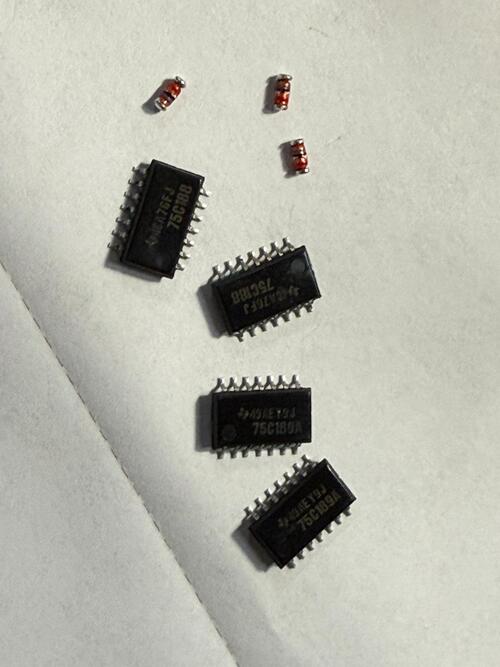
The Investigation Found Seven Tiny Components
The troubleshooting process led to a specific area of the Amada/Fanuc control board.
Inside that area, technicians found extremely small surface-mount components, including clamping diodes and RS-232 communication chips.
Together, these seven components support communication between the control and the PC.
At first glance, replacing seven components might sound simple.
It is not.
These surface-mount components are exceptionally small. A technician cannot simply unplug one component and install another. Instead, board-level repair requires specialized equipment, experience, precision, and a very steady hand.
Because of their physical size, even handling and positioning these components presents a serious technical challenge.
More importantly, the seven components were only one example of what can happen inside an aging control.
Seven Components Were Only the Beginning
The investigation revealed a much bigger consideration.
An older control contains many electronic components that have operated for decades. Those components do not all fail at the same time, and nobody can predict which one will fail next.
One control might develop a communication failure.
Another might experience a memory-related problem.
Elsewhere, another board-level component might reach the end of its service life.
Therefore, repairing one failed component does not renew the rest of the control.
You repair the failed component. The remaining decades-old electronics continue their service life.
That uncertainty creates the real challenge.
The next failure could happen six months from now.
It could happen six days from now.
It could happen six minutes from now.
No technician can accurately forecast the exact moment an individual aging electronic component will fail.
These Were High-Quality Industrial Controls
There is an important point to make here.
The original Fanuc control did not fail because Fanuc built poor equipment.
Quite the opposite.
Fanuc designed these controls with industrial-grade components for demanding manufacturing environments. Their durability explains why so many Amada machines continue operating with original control technology after decades of service.
Some controls have accumulated more than 200,000 hours of operation.
That is a remarkable service life.
Nevertheless, even high-quality industrial electronics eventually reach an age where component failure becomes a greater possibility.
The quality of the original control is precisely why it lasted so long.
Now, however, modernizing the control can bring the electronic side of the machine back to the same standard of dependability that owners already expect from their Amada mechanical systems.


Scarce Boards Add Another Layer of Risk
Component repair is only one part of the equation.
When a board develops a more serious failure, finding a replacement can become difficult. Older Amada/Fanuc boards can become scarce and expensive as the technology ages.
Even when a replacement board becomes available, the process does not necessarily end there.
The technician may need to install the board, restore machine parameters, adjust settings, verify functions, and test the machine before production can resume.
Depending on the failure, machine-specific macro programs and parameters can add another layer of complexity.
As a result, a repair that starts with one electronic failure can develop into a much larger downtime event.
The cost does not come only from the failed component.
It also comes from troubleshooting, repair labor, board availability, parameter restoration, testing, and lost production.
Most importantly, it comes from the time your Amada cannot produce parts.
What Happens When Program Communication Stops?
This case also demonstrates why communication circuitry matters so much.
When an older Amada control loses PC communication, the mechanical machine can remain ready to work.
Unfortunately, the production process cannot continue normally.
Programs may no longer transfer from the PC.
Operators may need to enter programs manually.
Programming takes longer.
Human error becomes more likely.
Tooling problems can follow.
Rejected parts can follow those tooling problems.
Then, delivery dates begin to move.
Meanwhile, your customer still expects the parts.
That is when the conversation changes from:
“We have a communication alarm.”
to:
“Why aren’t you running my parts?”
For a production shop, that difference matters.
The Case for an Amada Fanuc Control Upgrade
This case did not demonstrate a reason to replace the Amada.
It demonstrated a reason to protect it.
The mechanical system had already proven its value. The machine had already demonstrated the durability that owners expect from Amada equipment.
Therefore, replacing the entire machine would ignore one of its greatest advantages.
Instead, the logical approach was to modernize the control.
An Amada Fanuc control upgrade can replace decades-old control technology with a brand-new Fanuc control while preserving the proven mechanical foundation of the Amada.
That combination brings together two important strengths:
Amada mechanical durability.
Modern Fanuc control technology.
Want to protect your Amada before an electronic failure forces the decision?
Request an Amada Fanuc Control Upgrade
Upgrade on Your Schedule, Not the Control’s Schedule
An unexpected failure gives you very few choices.
First, you have to identify the failure.
Next, you have to locate the required board or repair solution.
Then, you have to complete the repair.
Finally, you have to restore the machine and return it to production.
All of that happens while the machine sits idle.
A planned Fanuc control upgrade changes that situation.
Instead, you can select the timing of the installation. You can prepare your production schedule. You can plan the downtime. You can move forward before a scarce board or aging component creates an emergency.
You control the timing instead of letting the failure control it for you.
Talk to Lapis About Your Amada Control
Older Amada Controls Can Reach This Point
Many proven Amada machines still operate with older control platforms.
Depending on the machine, that technology can include:
-
COMA control
-
Amada 04PC
-
Amadan 04PC
-
Fanuc 6M
-
Fanuc 6M control
-
Fanuc System 6M
-
Fanuc 18P
-
Fanuc 180i
These controls played an important role in the history of Amada production equipment.
However, decades of service eventually make control modernization worth considering.
An Amada CNC control retrofit can provide a new electronic foundation without sacrificing the mechanical system that made the machine worth keeping.
For shops considering a Fanuc retrofit, the goal is not to replace the proven Amada.
The goal is to give that Amada a modern control.
Explore Amada Retrofit Solutions
The Alarm Was the Warning
The communication alarm started the investigation.
Seven extremely small surface-mount components helped explain the immediate problem.
The age of the entire control revealed the larger issue.
That distinction became the most important lesson from this case.
The seven components were not the story. They were the warning.
An aging control contains many potential failure points. Some components become extremely difficult to repair. Some boards become scarce. Replacement costs can rise. Parameter restoration can take time. Most importantly, the next failure remains unpredictable.
Therefore, waiting for the next component to fail can turn a manageable upgrade into an emergency repair.
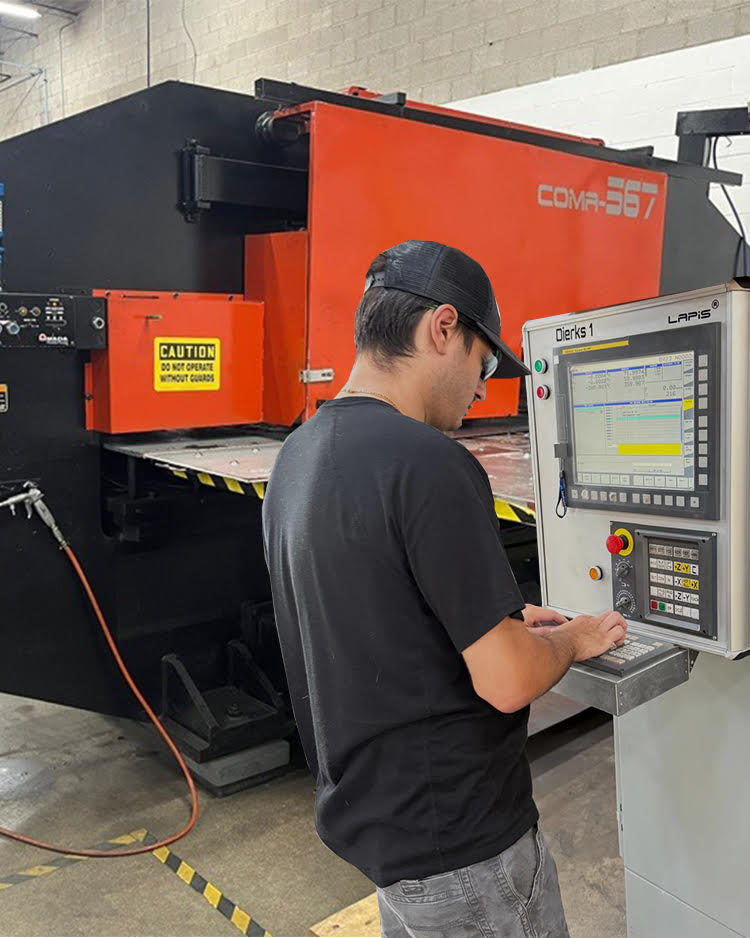
Keep the Amada. Renew the Control.
The Amada earned its reputation.
Its mechanical system remains the reason to keep it.
Its decades of production prove what these machines can accomplish.
Now give that proven machine a control that matches its future.
A new Fanuc control can provide modern control technology while Lapis provides the specialized support needed to integrate the upgrade with your Amada.
That means you do not throw away a great machine.
You do not surrender decades of proven mechanical durability.
Instead, you renew the control and protect the machine you already trust.
Don’t wait for an obsolete component to choose your downtime.
Plan the upgrade while your Amada is still producing.
Keep the machine that proved itself.
Give it the control it deserves.
GET YOUR AMADA FANUC CONTROL UPGRADE
Case Study Takeaway
This case began with one communication alarm.
The investigation found seven tiny surface-mount components.
However, those components revealed something much larger: an aging control contains many electronic components with decades of operating time behind them.
The Amada itself remained the valuable asset.
The solution was not to replace that asset.
The solution was to modernize its control.
With a new Fanuc control upgrade, you can keep the proven mechanical strength of your Amada while giving it modern control technology and continued support.
Keep the Amada. Upgrade the control. Keep producing.